Plus a Free talk, TUESDAY 15th December,
and details of our 2027 annual online, winter Art talks, see below!
our 2027 annual online, winter Art talks.
I’m delighted to announce details of our 2027 online, winter Art talks.
Arran’s Grand Art Tour of Italy & Rome: 1250-1790
8 Online Art talks (live and recorded)
Starts Tuesday 5th January, 2027
Tickets available now.
The course this year – the seventh year of these much-loved talks- will start with three whistle-stop tours of three, fascinating art cities in northern and central Italy – the dazzling cities of Padua, Mantua and Urbino, as a well as a look at medieval Rome- before heading back to Rome, for teh entire second half of our course, to explore the vast legacy of its artistic heritage, from the late medieval period to the eighteenth century.
Overall, this enjoyable, accessible, but high-value course, with live lectures every Tuesday afternoon, offers guests the chance to savour and learn more about five centuries of dazzling Italian Art. (All the talks are also available recorded to all guests each week)
It us possible to enjoy these talks yourself, a lovely way to spend an hour or so on a cold Tuesday afternoon in January and February. Guests are also very welcome to enjoy the talks alongside a family member, and you don’t need to buy two tickets to do that.
an ideal Christmas gift
Finally, it is also possible to purchase and gift the talks as a present to a friend or fmaily member, an ideal Christmas or winter gift for any art-lover. Just remember to tick the “Gifting” tick box when you buy the tickets, to exercise this Gift option.
We even have a beautiful little PDF card, you can download and print out, included in your proof-of-purchase/ confirmation email.
What is in the weekly talks: what do they cover?
Our broadly chronological approach will take us from the famous frescoes of Giotto, one of the foundation stones of western art, through the glories of Renaissance and baroque art in the 1440s to the 1600s right up to the fascinating phenomenon of Grand Tour art, produced for wealthy 18th century tourists by specialists like Canaletto in Venice, and by Panini and Piranesi in Rome.
Within this vast canvas we shall focus on a number of key themes, such as how subjects, details, and symbols are used to convey meaning (“iconography”) And on “patronage” – meaning the way the people who commissioned artworks, such as Renaissance altarpieces, often helped determine both the subject of artworks, and it’s treatment by the artist.
To help us focus on outstanding examples of artistic excellence, and on our themes, we shall focus on a number of key locations and periods, Notably on the birth place of western art in Padua during the 1300s; on the Renaissance city-state of Mantua in late 14oos to early 1500s; and on the city of Urbino during the same period.
Most of all, and for the entirety of the second half of our course, we shall focus on the Eternal City of Rome, where generations of artists drew inspiration from classical antiquity, as they vied for the patronage of wealthy cardinals. And where some of the greatest artists in history found employment creating the visual, artistic and architectural language of the Papacy, the counter-reformation, and the Roman catholic church.
Overall we shall see how, for artists as much as pilgrims, “All Roads led to Rome”
See below, for a brief breakdown of our 8 week course.
Our course at a glance:
Weeks 1- 4:
Week One:
Padua in the 1300s and 1400s. Giotto and his successors. The legendary fresco cycle of the Scrovegni chapel, a watershed in western art. And the remarkable legacy of other frescoes, all around the historic city of Padua, that bear witness to Giotto’s influence throughout the 1300s. Plus the genius of the sculptor Donatello, and his greatest ever work.
Week Two: Rome 1250-1450:
Rome in the late medieval period and into the early Renaissance. The artists from medieval Rome that inspired Giotto, and where to see their work today.
Talk Three: Urbino in the 1400s.
How a mercenary military general created one of the great courtly cultures of Renaissance Italy, and inspired some of the finest artworks of the period.
Talk Four: Mantua in the 1400s and 1500s.
How the famous Gonzaga family, Lords of Mantua, attracted and employed some of the greatest artists of the period, including Florentine theorist and architect Leon Alberti; painter Andrea Mantegna, and “Mannerist” painter and architect Giulio Romano, to create some of the original and well-known palaces, churches, and paintings of Renaissance Italy.
Weeks Five to Eight: all roads lead to Rome:
The entire second half of our course focuses on the Eternal city of Rome.
As the Papacy returns to Rome, after decades of exile and schism, the increasing, ever-greater power and wealth of the church will attract the greatest artists in Italy to the ancient capital once again.
Week Five: Rome 1415 to the 1480s.
In the 1400s, after the return of the papacy to Rome, the city sees a gradual artistic flowering. Fascinating, little-known figures like Antoniazzo Romano help introducing ideas from elsewhere in Italy, while also starting the beginning of a distinctive, Roman Renaissance style.
In the 1450s, the great Florentine artist-monk Fra Angelico spends the last few years of his illustrious career in Rome, creating a little known masterpiece. Later in the 1400s, Perugino, Ghirlandaio and Botticelli are among other artists we encounter, coming to work in Rome at this time.
Week Six: Rome 1480 to 1545.
Under the papacies of Julius II, and the two later, Medici Popes, Donato Bramante reinvent European architecture, with his works like the Tempietto and plans for the vast new Saint Peter’s basilica.
Meanwhile, Raphael and Michelangelo undertake a similar reinvention of painting and sculpture. In doing so they create a set of values, images and ideas that will dominate western taste and artistic teaching for centuries to come.
We will look at Michelangelo’s two huge projects within the Sistine Chapel, executed over twenty years apart. We will look closely at Raphael’s paintings for the papal stanze and elsewhere.
Week Seven: Rome 1530- 1690
Following the brutal Sack of Rome, by Imperial troops in 1527, the city gradually recovers and Michelangelo returns. But in the following century, Rome must confront a new enemy: the political and spiritual challenge laid down by the Protestant Reformation.
Rome’s Counter-Reformation response – known as the baroque– deploys art, architecture and music, to startling effect: the paintings of Caracci brothers; the revolutionary realism of Caravaggio; the dazzling virtuoso sculpture and architecture of Bernini and Borromini.
Week Eight: Rome 1670 – 1790.
The extraordinary baroque revolution continues, as the entire city is remade, with grand street and avenues linking the great basilica churches of Rome, new square and fountains, and hundreds of churches transformed by art. Ancient Egyptian obelisks brought over by the Caesars of ancient Rome are excavated, re-instated and made the centrepiece of new squares and monuments. We conclude our course by looking at the Rome and Italy of the 18th century, as the influx of wealthy Grand Tourists create a new type of patron, and a new type of art.
There are four types of tickets available for our course.
Full course tickets, access to all eight talks, both live and recorded, every week for eight weeks. Includes two emails every week, the first with a link to the live talk, and a second email, within 24 hours each week, this time with a link to the recorded version. Tickets are €112 + booking. (The overall price corresponds to roughly €14.50, per talk). To gift these talks, please tick the gifting check box, during your purchase. Full course tickets, for talks 1-8 are available from now, up to 24 hours before the first course, and you can find them here.
If you are booking before 15 December, feel free to avail of our Early Bird offer, see below…
Early-bird Tickets: Offer ends Tuesday 15th December. Full course tickets, access to all eight talks, both live and recorded, every week for eight weeks, just as above, available at a €20 discount, exclusively for guest who book in the first 3 weeks from release. €92 + booking fee (of 6%) equals €97.50 total. (Corresponds to roughly €11.50, per talk).
Discounted early Bird Tickets, for the Full course of talks 1-8 are available now, up to 15 December (only) and you can find them here.
Purchase the course in two separate halves?
Talk 1-4 Ticket: for people who are more interested in the first half of the course (Padua, Mantua, Urbino, and late medieval Rome) or who simply do not wish to commit to the whole course. €55 + booking fee (6%) for these First 4 talks. Talks 1-4 ticket now available here.
Talk 5-8 Ticket: two emails each week, with two separate links each week, giving access to the second half of our course (live and recorded) bringing you through Renaissance, and Baroque Rome, up t the Grand Tourist era of the 18th century. €55 + booking, for the second half of the course. Talks 5-8 ticket now available here.
Other news: Free talk, TUESDAY 15th December,
Arran’s Free, Taster Tour of Italy and Rome
This fun little talk of 45 to 55 minutes showcases some of the remarkable artworks we will view together in our winter online talks in January and February.
Using the course-structure of those eight talks as our guide, we shall jump around Italy and Rome, virtually speaking, for just under an hour, looking at a handful of superb artworks that shall be discussed later, in more depth after the new year.
If you’d a like a sneak preview of some of the northern art cities like Padua, Mantua or Urbino that we shall discuss in our slide presentations in January. Or if simply – like me- you rarely tire of looking at Italian Renaissance frescoes, churches and altarpieces, there could be worse ways to spend an hour.
For those who also may even be considering joining our January-February course, but would like a taste of the stye of presentation, this isalso an ideal, no-commitment chance to see the way we do things.
This should be a fun and interesting talk. Join us if you can.
All are very welcome.
Places are free, but places must be registered at least 24 hours in advance please. Please ensure you fill out your email correctly: otherwise we cannot send you the link; and please register by 2pm on Monday 14th December at the very latest. (i.e. the deadline is exactly 24 hours before the live talk next day)
You will receive an email with a link to access the free talk, at least 2 hours before the talk commences. Please follow the instructions in that email, to access the free talk.
That Zoom call starts 2pm sharp, on Tuesday 15th December. Log-on at least 5 minutes beforehand, so by 1.55pm latest please. The talk will start 2PM sharp (no admittance to late-comers). Duration of talk between 45 to 55 minutes.
Simply use this link if you would like to register for the free talk. We will then send all registered attendees the link to attend the live talk. To anticipate a possible inquiry, yes, I will also record the talk, if possible, and if it is available recorded, then a link to free access to that recording will also appear here for a limited period after the talk. Please understand that, for copyright reasons, and for commercial and other reasons, we can not supply unlimited access to the free talk indefinitely. Access to the recorded talk it may only be available for a few days or so.
Other news: our overseas trip to Rome, 11th to 16th of April, 2027
We have two places left for our upcoming trip to Rome,
which is going to be a real treat. Everyone is welcome.
These tours tend to be very convivial, as well as hugely enjoyable and educational.
You can see more details on the itineraries, inclusions, price, and on how to reserve one of the remaining spots, here.
________
Two of our previous six courses – the Florence series of talks, and the Rome series of talks – are available to buy (as recorded talks). Simply press the Green, on-screen “Buy Now” button, then follow the prompts to “Art Talks” to purchase the Florence or Rome courses. Each course is available to buy in two blocks of 4 talks.
About the speaker:
Arran Henderson studied Art History at Oxford Brooks, and later at the University of Rhode Island, Central Saint Martin’s London, the National College of Art and Design, and Trinity College Dublin.
He has written on various aspects of art, art history and material culture for a wide range of publications including The Irish Art Review; and taught Art History at A-Level. Arran has led over 100 acclaimed private tours in museums like the Hugh Lane Gallery, the Chester Beatty Library, and the National Gallery of Ireland.
2026 was the 6th year of his annual, winter art talks. In addition, Arran has recently starting bringing groups on art excursions abroad, with the inaugural overseas art trip exploring Venice in October-November of 2025. In May of 2026, our second trip explored Rouen and Normandy. In April of 2027 we will bring a group to Rome.
images:
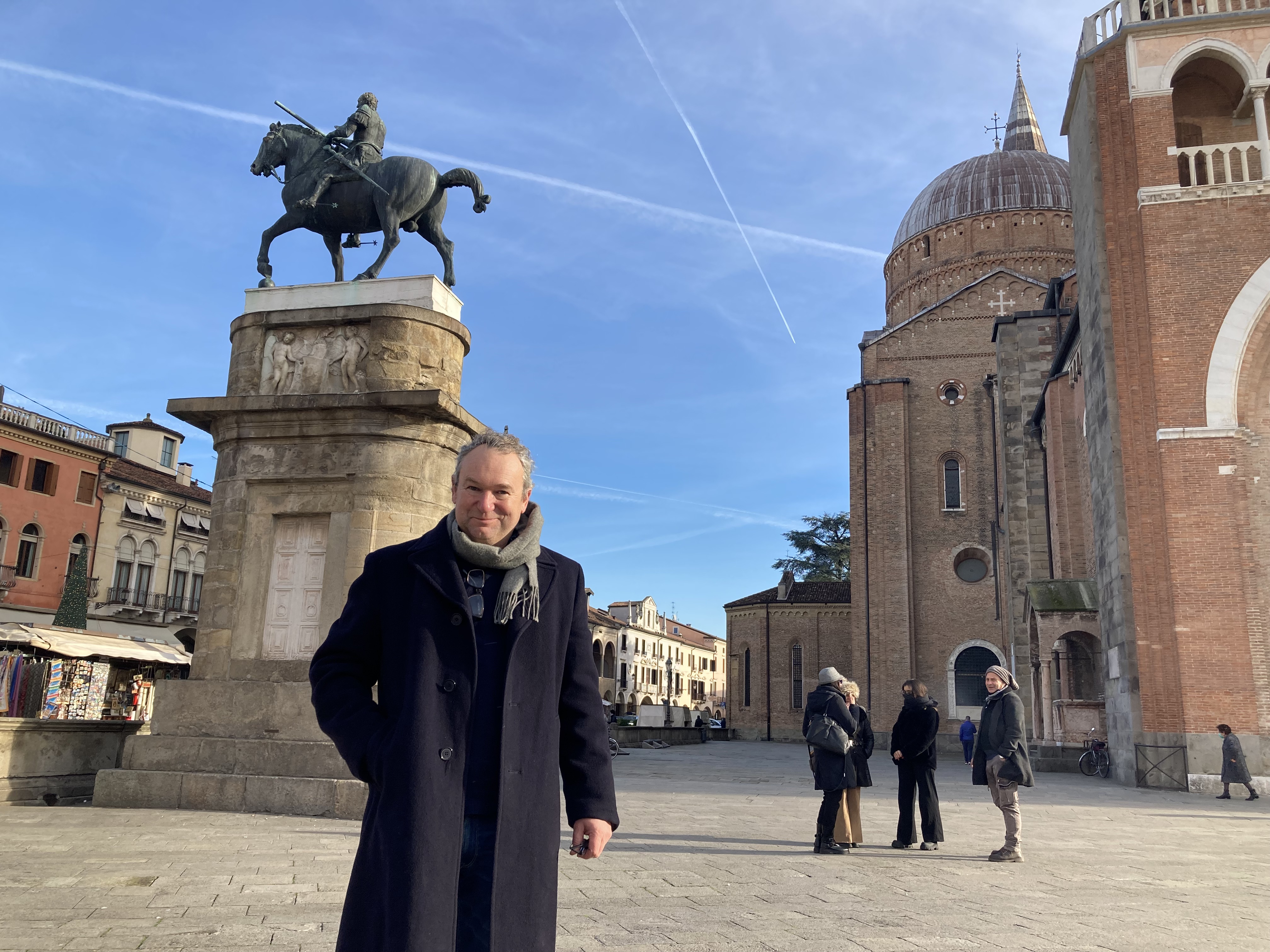
above: Arran outside the great basilica in Padua, in front of Donatello’s equestrian statue of Gatamelata;
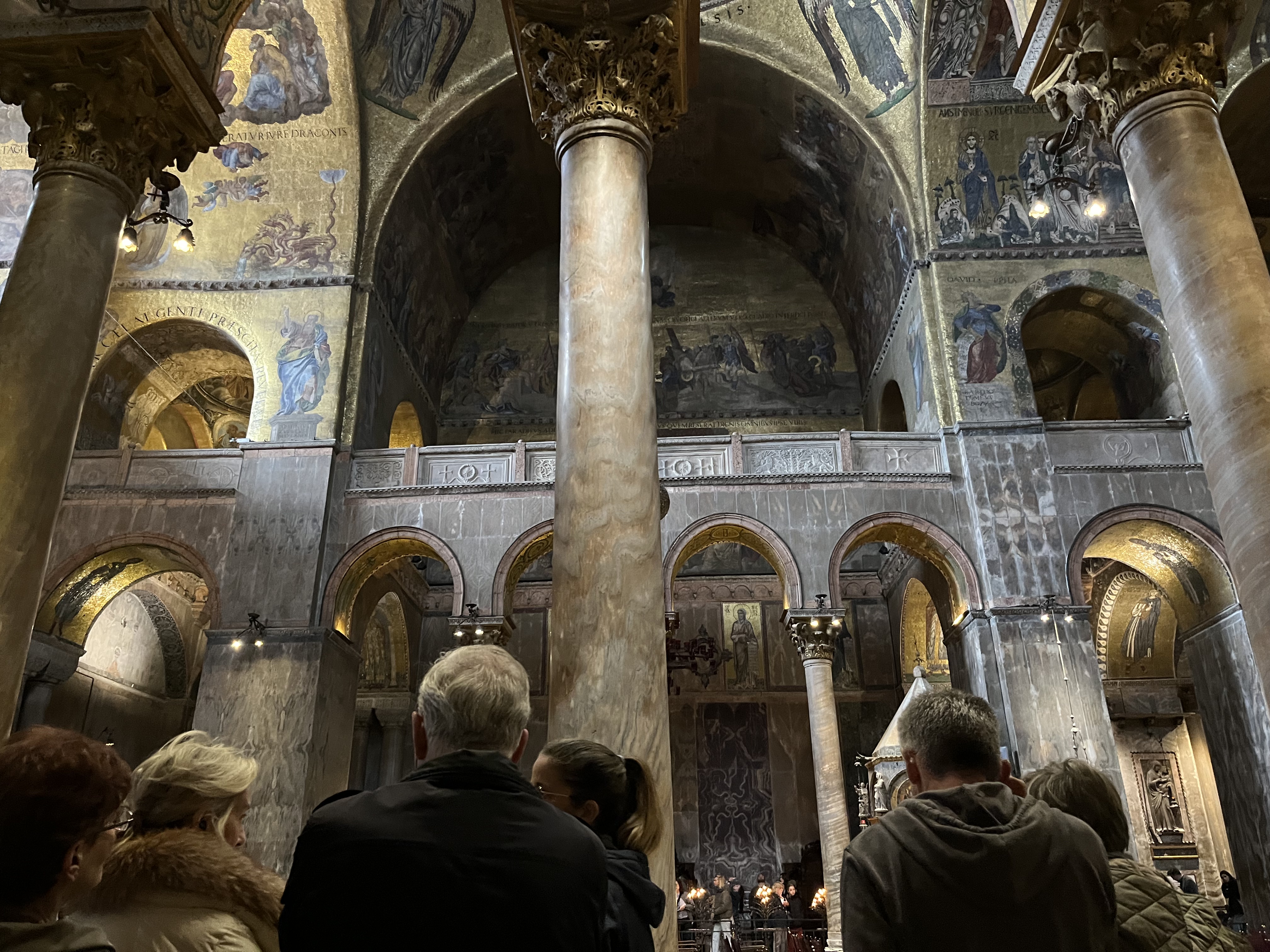
below, guests on our tour of Venice in autumn 2025, in the basilica of San Marco; x
below: my guests on our art tour of Rouen and Normandy may 2026, in the Abbey church of saint-Ouen.

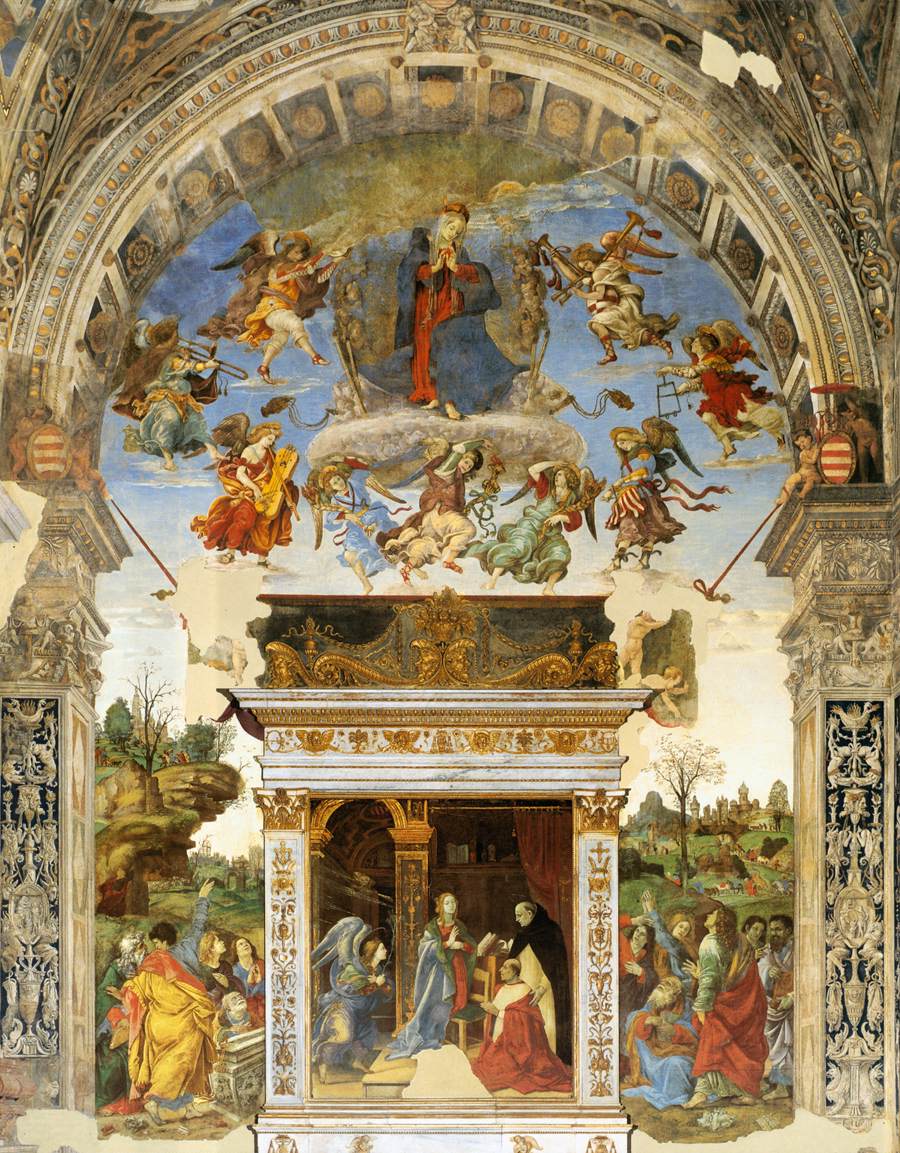
below: the Carafa chapel in Santa Maria sopra Minerva, Rome panted late 1400s by Filipino Lippi: one of our many destinations in April’s overseas trip;
below: Arran leading a discussion on a work by Caravaggio, in the Musée de Beaux Arts in Rouen, Normandy.

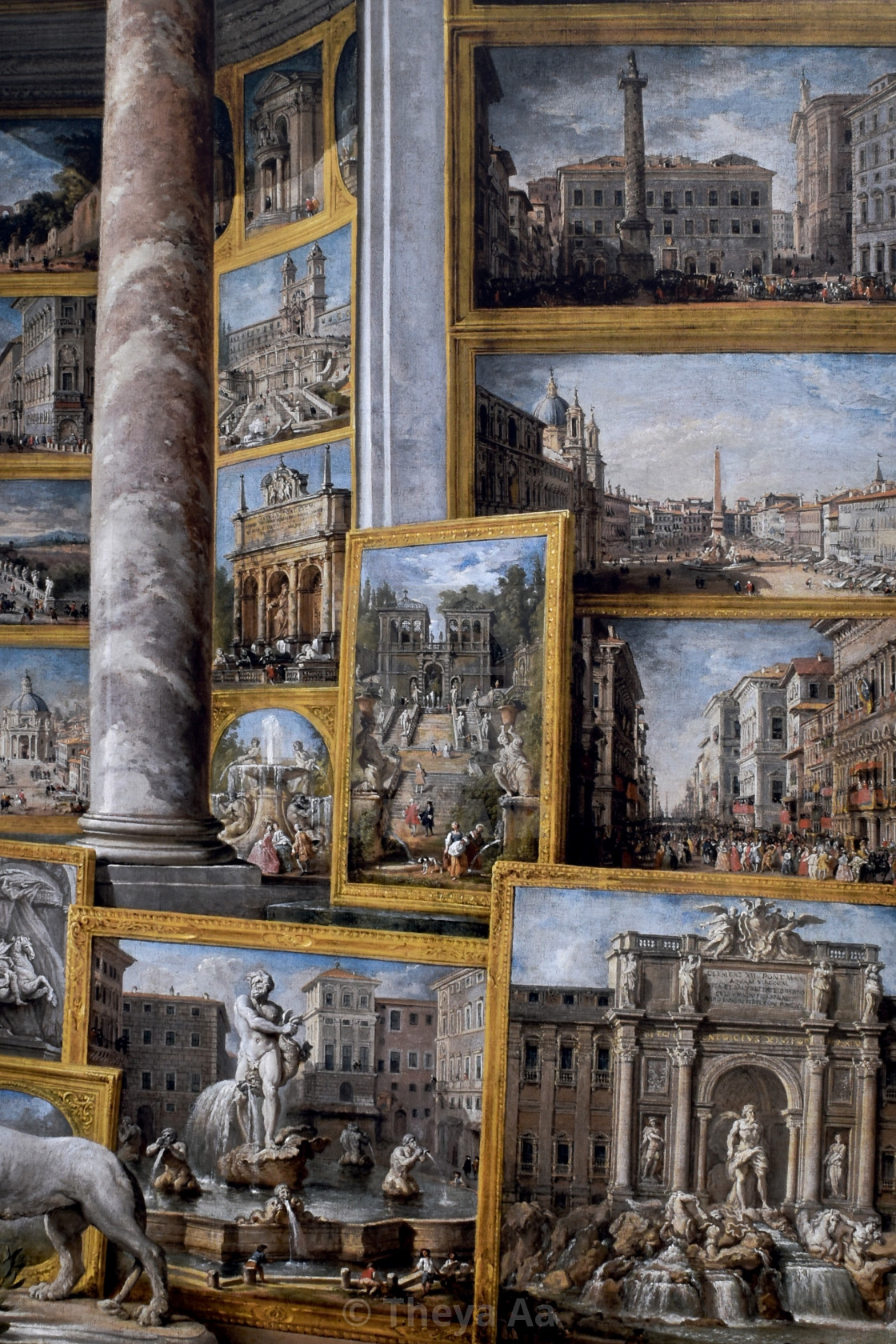
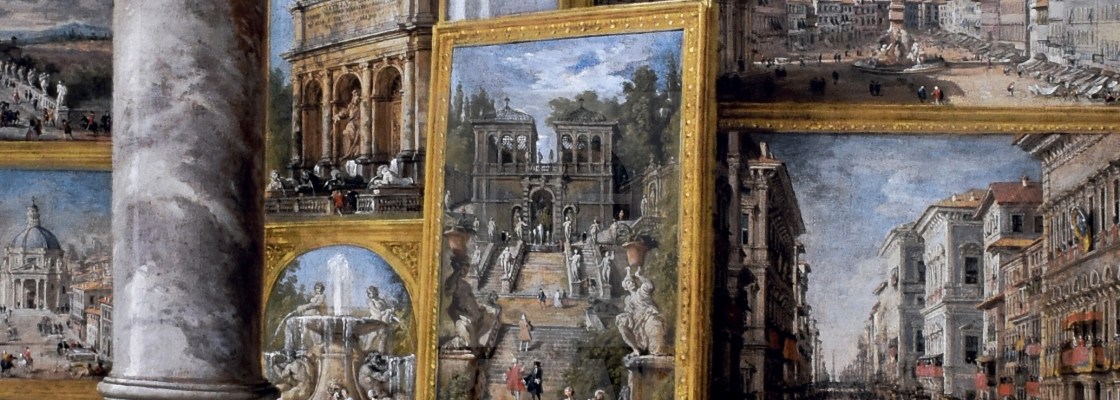
below: “Modern-Rome” (detail) by Giovanni-Paolo Panini, this version in the Metropolitan Museum NY, painted for the Grand Tour market in 18th century Rome.